
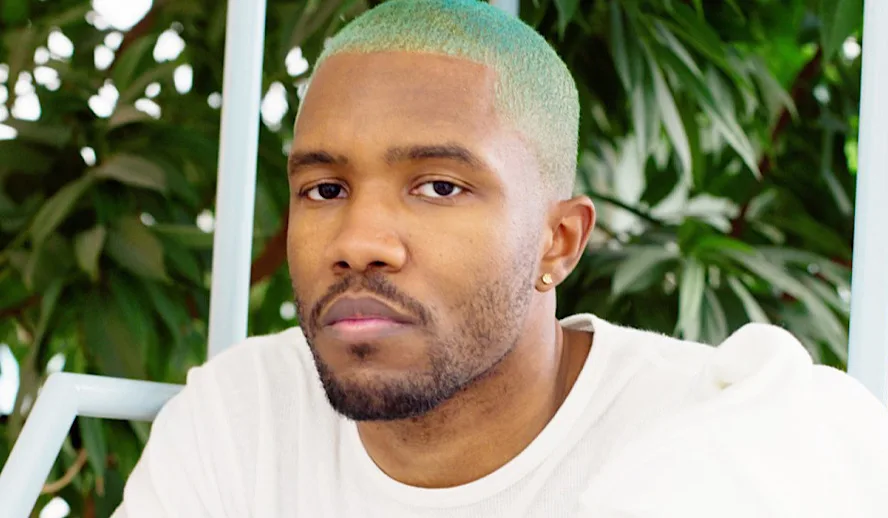
Few specialists in present-day music have managed to reshape the emotional and sonic landscape of popular culture as significantly as Straight to the Point Sea. His work doesn’t really exist within genres—it floats between them, breaks down their boundaries, and remakes them into something insinuate, delicate, and profoundly human. To get it straight to the point, Sea is to step into a world where memory feels substantial, where yearning echoes through layered harmonies, and where hush can be as expressive as sound click here.
This is not fair, the story of a performer. It’s an investigation of defenselessness, personality, and aesthetic autonomy in a time that frequently stands up to all three.
Origins: From Christopher Breaux to Straight to the point Ocean
Born Christopher Edwin Breaux in Long Shoreline, California, and raised in Unused Orleans, Straight to the point Ocean’s early life was molded by difference. Modern Orleans, with its rich musical legacy and social depth, played a vital role in shaping his sensibilities. However, his childhood wasn’t characterized by benefit or simply getting into the industry. Instep, it was stamped by interest, segregation, and a profound connection to music as both elude and expression.
Hurricane Katrina in 2005 became a turning point. The storm destroyed his domestic and personal recording equipment, effectively wiping out a lifetime of early work. But, rather more than finishing his desire, it honed them. He moved to Los Angeles, where he began working unobtrusively behind the scenes, composing tunes for setup artists.
Before the world knew his voice, it now knew his words. Sea contributed to tracks for artists such as Justin Bieber, Beyoncé, and Brandy. These early encounters gave him an understanding of the apparatus of the music industry—but they also uncovered its limitations.
He wasn’t interested in being a ghostwriter until the end of time. He needed to tell his own stories.
Nostalgia, Ultra: The Entry of a Unmistakable Voice
In 2011, Straight to the point Sea released his debut mixtape, Sentimentality, Ultra. It didn’t arrive with an enormous marketing push or standard expectations. Instep, it spread naturally, carried by audience members who recognized something rare.
The venture mixed elective R&B, indie rock influences, and offbeat instrumentation. Tracks like “Novacane” and “Swim Good” presented a storyteller who felt withdrawn from the world, however profoundly influenced by it. Ocean’s narration was cinematic—less about snares and more about atmosphere.
What set “Nostalgia, Ultra” apart was its enthusiastic equivocalness. There were no clear resolutions, no clean endings. In the meantime, audience members were cleared out in the center of uncertain feelings—addiction, depression, and short-lived connections.
It was a calm revolution.
Channel Orange: Characterizing a Generation
Ocean’s major-label debut,” Make Big Appearance, Channel Orange,” released in 2012, cemented his place as one of the most important voices of his time. Acclaimed and socially impactful, the collection explored loneliness, love, identity differences, sexuality, and existential longing.
Tracks like “Thinkin Bout You” showcased his ability to convey powerlessness without drama. “Pyramids,” a driven multi-part epic spanning nine minutes, mixes ancient history with present-day wantonness. In the meantime, “Bad Religion” advertised a recurring contemplation on unreciprocated love and otherworldly struggle. Fairly recently, upon the album’s release, Sea distributed an open letter revealing that his true love, his first love, had been a man. In a genre and industry that regularly battles with openness around sexuality, this minute was unobtrusively radical. A fantastic statement didn’t surround it. It was basically a part of his truth.
That trustworthiness got to be indivisible from his art.
“Channel Orange” wasn’t a fair collection; it was an explanation. It challenged notions of manliness in R&B, expanded the genre’s topical scope, and demonstrated that reflection could reverberate globally.
Silence and Anticipation
After the victory of “Channel Orange”, Straight to the point Sea vanished from the open eye. A long time passed without a modern collection. In an industry driven by steady yield, this hush was unusual—and powerful.
Fans hypothesized unendingly. Rumors circulated. Discharge dates came and went. But Sea appeared uninterested in nourishing the cycle. In the meantime, he was recalibrating—not fair musically, but philosophically.
This period of nonattendance wasn’t dormancy. It was incubation.
For more information check now.
Endless and Blonde: A Double Masterpiece
In 2016, Straight to the point Sea returned—not with a single venture, but with two interconnected works: Unending and Blonde.
“Endless”, discharged as a visual collection, was both a fulfillment of legally binding commitments and a piece of conceptual craftsmanship. Including Sea building a staircase in a stockroom, it obscured the line between music and establishment. The extent was reflective, unique, and intentionally inaccessible.
Then came “Blonde”.
If “Channel Orange” was organized and narrative-driven, *Blonde* was divided and impressionistic. It felt like memory itself—nonlinear, moving, and regularly conflicting. Tunes like “Nikes” twisted vocals into something spooky and disorienting. “Self Control” captured the throb of transitory closeness with obliterating accuracy. “Ivy” investigated youthful love and lament, whereas “Nights” broadly shifted its beat midway through, marking a common move in the album’s emotional arc.
“Blonde” resisted simple translation. It didn’t offer clear messages or ordinary tune structures. Instep welcomed audience members to sit with ambiguity. Critics and fans alike recognized it as a point of interest—one that reimagined what modern R&B might be.
Themes: Memory, Personality, and Impermanence
Across his discography, Straight to the Point Sea returns to recurring subjects. These aren’t fair expressive motifs—they’re passionate systems that shape how his music is experienced.
Memory as a Living Entity
Ocean treats memory not as something settled, but as something liquid. In his tunes, the past is always shifting—reinterpreted through the focal point of the show. Lines are obscure between what happened and how it felt. This makes a sense of closeness that’s troublesome to reproduce. Tuning in to his music regularly feels like perusing someone’s private journal.
Identity and Self-Discovery
Ocean’s work reliably investigates identity, not fair in terms of sexuality, but in terms of self-perception. Who are we when we’re alone? Who do we get to be in relationships?
Rather than advertising answers, he presents questions.
Impermanence
Nothing in a Straight-to-the-Point Sea Melody feels changeless. Connections blur. Minutes pass. Indeed, feelings appear brief. This sense of impermanence gives his music a clashing quality. It’s not about loss—it’s about the certainty of change.
Sonic Advancement: Breaking Class Boundaries
Frank Ocean’s sound resists simple categorization. Whereas regularly labeled as R&B, his music joins components of:
Ambient
Indie rock
Electronic
Jazz
Psychedelic pop
He habitually dodges conventional melody structures. Choruses are now and then missing. Snares are downplayed. Hush is utilized as a compositional apparatus. Makers like Malay and Pharrell Williams have collaborated with him, but Ocean’s aesthetic vision remains unmistakably his claim. His utilization of vocal manipulation—pitch shifting, layering, and distortion—adds another dimension. Voices in his tunes frequently feel confined, as if coming from distinctive adaptations of himself.
Independence and Industry Disruption
One of the most critical viewpoints of Straight to the Point Ocean’s career is his approach to the music industry. After satisfying his contract with Def Stick through “Endless”, he freely discharged “Blonde” on another day. This vital move enabled him to retain possession and imaginative control—an increasingly rare accomplishment for artists at his level.
It wasn’t a fair commerce choice. It was a statement.
Ocean illustrated that specialists seem to challenge conventional industry structures without relinquishing creative astuteness. His approach has since influenced an era of artists seeking independence.
Cultural Impact
Frank Ocean’s impact extends beyond music.
Redefining Manliness in R&B
Ocean’s helplessness challenged long-standing standards inside R&B and hip-hop. He displayed an adaptation of manliness that embraced enthusiastic openness rather than smothering it.
LGBTQ+ Representation
His openness about his sexuality gave visibility in a space where it had frequently been constrained. Vitally, he didn’t position himself as a spokesperson—he basically existed authentically.
Aesthetic Influence
From his modest collection of works of art to his enigmatic social media presence, Sea has shaped modern artistic aesthetics. His impact can be seen in mold, visual craftsmanship, and, indeed, the way specialists connect with their audiences.
The Secret of Absence
Since “Blonde”, Straight to the point Sea has discharged, as a matter of fact, a modest bunch of singles, including “Chanel” and “DHL.” Each discharge is treated as an occasion, dismembered and analyzed by fans and faultfinders alike.
His shortage has become a part of his identity.
In a world immersed in substance, Ocean’s restriction feels nearly radical. He reminds us that nonappearance can be powerful—that expectation can develop appreciation.
Emotional Reverberation: Why His Music Endures
Frank Ocean’s music doesn’t request attention—it welcomes it. There’s a quietness to his work that energizes audience members to lean in. His melodies regularly feel profoundly individual yet also all-around relatable. Whether it’s the throb of first love, the disarray of character, or the passage of time, his subjects resonate across diverse experiences. He doesn’t give closure. In step, he makes space for reflection, for elucidation, for feeling.
Legacy in Progress
It’s enticing to outline Straight to the point Ocean’s career in terms of what he has accomplished so far. But, more curiously, what remains uncertain. He has discharged, as it were, a modest bunch of ventures; however, each one has had an unbalanced effect. His impact can be heard in endless modern specialists, indeed, when it’s not unequivocally acknowledged.
And still, there’s a sense that his story is unfinished.
Conclusion: The Craftsmanship of Feeling
Frank Ocean’s work is less about music as amusement and more about music as an encounter. He doesn’t make songs—he makes enthusiastic scenes. In a time that frequently prioritizes speed, visibility, and steady yield, Sea works in unexpected ways. He moves gradually. Purposely. On his claim terms. That approach has permitted him to create work that feels immortal, or even more out of vogue. To tune in to Straight to the point Sea is to go up against your claim recollections, your claim vulnerabilities, your own brief moments of clarity. His music doesn’t tell you what to feel—but somehow or another, it gets it precisely how you feel.