
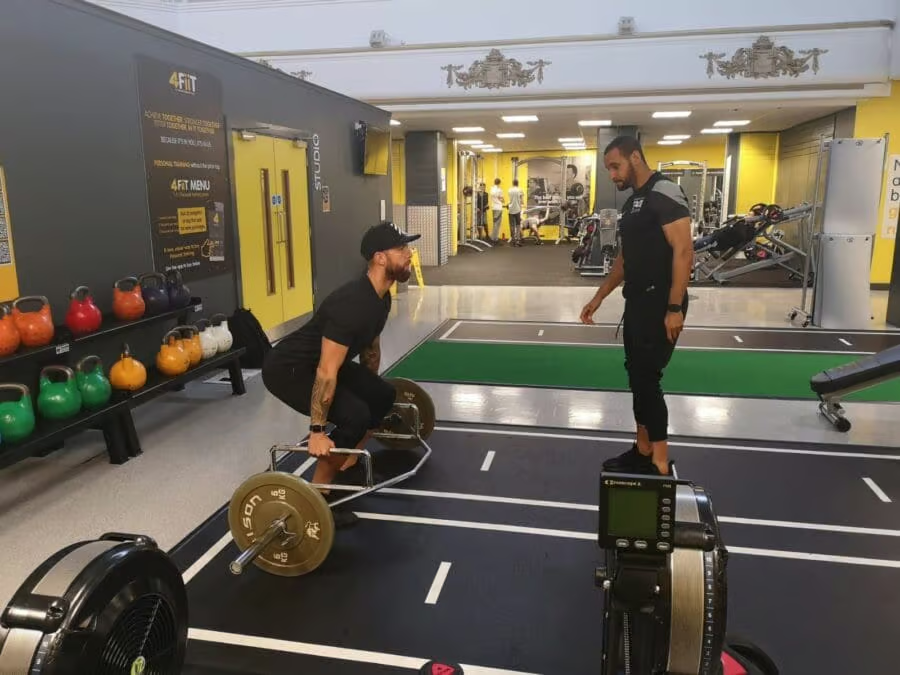
Bridging the Gap: Optimizing Weight Training and Functional Fitness Areas
The modern fitness landscape is no longer divided into isolated camps of traditional weightlifters and functional training enthusiasts. Today, the most effective commercial gyms, corporate wellness centers, and home training spaces deliberately merge these two modalities. While weight training focuses on muscle hypertrophy, absolute strength, and targeted structural development, functional fitness emphasizes multi-joint movements, agility, and real-world physical application. Designing a facility that seamlessly integrates both zones requires a strategic understanding of equipment synergy, spatial layout, biomechanics, and safety.
Understanding the Distinct Roles
To create a cohesive training environment, one must first understand the unique demands of each discipline. Traditional weight training areas are structurally predictable. They rely heavily on fixed tracks, such as smith machines and selectorized cable stacks, alongside heavy free weights like barbells, dumbbells, and plates. The primary goal in this zone is isolation and progressive overload. Gym members utilize these spaces to build raw force, target specific muscle groups, and correct muscular imbalances through controlled variables.
Conversely, functional fitness areas prioritize freedom of movement. These spaces mimic natural human biomechanics—pushing, pulling, hinging, squatting, carrying, and rotating. The equipment is dynamic and adaptable, featuring turf tracks, kettlebells, medicine balls, suspension trainers, plyometric boxes, and battle ropes. Instead of isolating a single muscle, functional training trains the nervous system to coordinate entire kinetic chains, improving core stability, balance, and athletic longevity.
Spatial Design and Safety Considerations
Merging these two concepts requires careful architectural planning to ensure safety and optimal traffic flow. Traditional weight training involves heavy, vertical loads that risk dropping. Therefore, this zone requires thick, impact-absorbent rubber flooring to protect the subfloor and dampen acoustic vibrations. Structural lifting zones, such as deadlift platforms and power racks, should be placed against solid walls or grouped together away from high-traffic walkways to prevent accidents.
Functional zones demand a different structural approach. They require open, unobstructed floor space to accommodate dynamic movements like sled pushes, lunges, and medicine ball throws. Installing a dedicated synthetic turf lane next to the rubberized weight area creates a clear visual and physical boundary between static lifting and dynamic moving. Furthermore, high-velocity activities, such as kettlebell swings or Olympic lifting, must be kept well clear of selectorized machine zones where exercising patrons have limited peripheral vision.
Selecting Versatile Equipment
The most efficient fitness spaces utilize “bridge equipment” that serves both traditional strength and functional conditioning goals.
- Modular Rigs: A centralized structural rig can house barbell racks for traditional squats while simultaneously offering attachment points for suspension straps, pull-up bars, and resistance bands.
- Adjustable Cable Columns: Cable systems allow for isolated bodybuilding movements like tricep press-downs, but also accommodate multi-planar functional movements like woodchops and single-leg cable rows.
- Dual-Purposed Storage: Utilizing vertical storage trees for both Olympic plates and kettlebells keeps the floor clear, maximizes square footage, and allows athletes to transition quickly between strength and mobility work.
Maximizing Training Synergy
Ultimately, a well-designed facility encourages users to blend both methodologies for superior physical results. A member might utilize the weight nyc gyms training zone to build foundational leg strength with heavy barbell squats, then immediately step onto the functional turf to perform explosive kettlebell swings and lateral boundary jumps. By eliminating the physical barriers between these training styles, facilities foster a comprehensive approach to health, longevity, and high-performance athleticism.