

Your vision plays an important role in how you experience everyday life, from reading and driving to enjoying time with family and exploring the world around you. Because some eye conditions can develop quietly, regular eye care is essential for protecting long-term sight. Glaucoma care in Rancho Mirage focuses on identifying glaucoma early, monitoring changes in the eye, and choosing an appropriate treatment approach to help prevent further vision loss.
Glaucoma is a chronic eye disease that damages the optic nerve, which carries visual information from the eye to the brain. In many cases, the disease progresses gradually without noticeable symptoms. By the time a person realizes that something has changed, permanent vision loss may already have occurred. This is why comprehensive eye examinations and ongoing monitoring are so important.
At Desert Vision Center, glaucoma care is centered on early detection, individualized treatment, and protecting the vision patients have today while helping preserve it for the future. The practice serves patients in Rancho Mirage and throughout the Coachella Valley with advanced ophthalmic care.
What Is Glaucoma?
Glaucoma refers to a group of eye diseases that can damage the optic nerve. Eye pressure is an important factor, but glaucoma is not simply a condition of having high eye pressure. Some people can experience optic nerve damage even when their pressure falls within what is considered a normal range.
When glaucoma progresses, it can gradually affect peripheral vision. Without appropriate management, the disease can eventually interfere with central vision and may result in significant, irreversible sight loss.
One of the biggest challenges with glaucoma is that early disease may not produce obvious warning signs. A person may continue seeing normally while changes are occurring inside the eye. For that reason, relying only on noticeable symptoms is not an effective way to monitor eye health.
Why Early Glaucoma Detection Matters
Early detection gives patients and their eye care team an opportunity to monitor the condition before substantial vision loss occurs. Once optic nerve damage has happened, it cannot simply be reversed. However, appropriate treatment can help lower eye pressure and reduce the risk of additional damage.
A comprehensive glaucoma evaluation may include several different tests. Eye pressure can be measured through tonometry, while examination of the optic nerve helps identify structural changes. Visual field testing can evaluate peripheral vision, and advanced imaging can help monitor the health of the optic nerve over time. The American Academy of Ophthalmology also emphasizes that checking eye pressure alone is not enough to diagnose glaucoma.
This combination of testing allows an ophthalmologist to look at both the structure and function of the eye. Repeated evaluations can also help identify whether glaucoma is stable or showing signs of progression.
Who May Be at Risk for Glaucoma?
Glaucoma can affect different types of patients, but certain factors may increase the likelihood of developing the disease. A family history of glaucoma is an important consideration. Other risk factors can include elevated eye pressure, certain refractive conditions, diabetes, cardiovascular or circulation-related health concerns, and previous eye trauma.
Age is another important consideration. As people get older, regular comprehensive eye examinations become increasingly valuable for detecting conditions that may not cause early symptoms.
If glaucoma runs in your family or you have been told that your eye pressure is elevated, discussing your individual risk with an ophthalmologist can help determine an appropriate monitoring schedule.
Understanding Glaucoma Symptoms
Many forms of glaucoma do not cause noticeable symptoms in the early stages. This is why glaucoma is frequently described as a “silent” eye disease.
As the condition advances, vision loss may gradually develop, often beginning with peripheral vision. Because the changes can happen slowly, some people may adapt without realizing that their visual field has narrowed.
Sudden eye pain, severe redness, blurred vision, halos around lights, nausea, or other abrupt visual changes can indicate an urgent eye problem and should not be ignored. Anyone experiencing sudden changes in vision should seek prompt professional medical evaluation.
How Glaucoma Is Diagnosed
A glaucoma evaluation is more comprehensive than a simple eye-pressure check. Your ophthalmologist may examine the optic nerve, assess eye pressure, evaluate peripheral vision, and use imaging technology to identify structural changes.
At Desert Vision Center, the glaucoma evaluation process is designed to help identify disease and monitor progression. The practice explains that visual field testing can map peripheral vision, while optical coherence testing can help evaluate structural changes in the optic nerve. Combining these measurements over time provides valuable information about whether the disease is progressing.
This is particularly important because glaucoma management is often an ongoing process rather than a one-time treatment. Regular follow-up appointments allow your ophthalmologist to adjust care when necessary.
Glaucoma Treatment Options
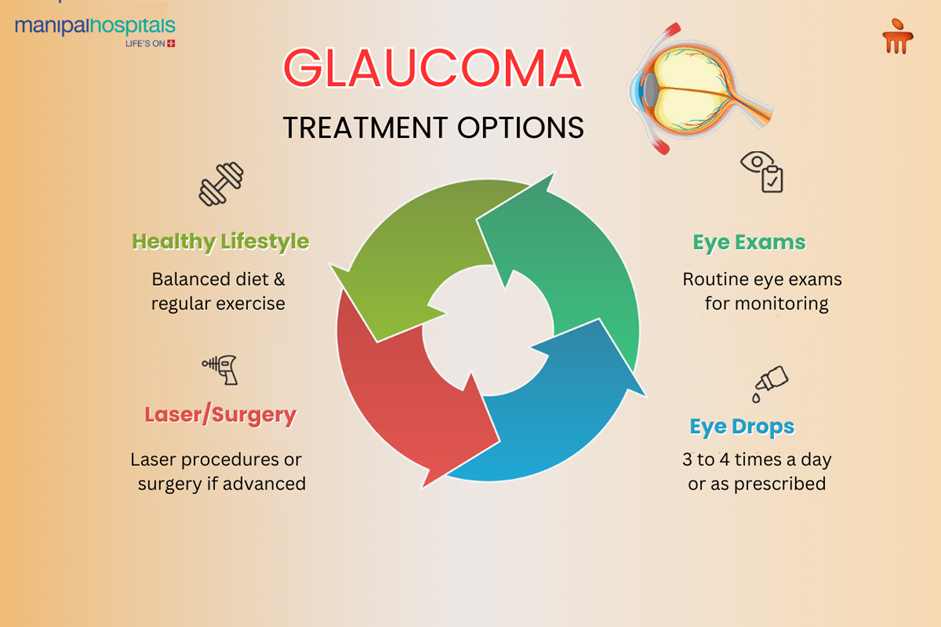
There is currently no cure that restores vision already lost from glaucoma. However, treatment can help control the condition and reduce the risk of further optic nerve damage.
The appropriate treatment depends on factors such as the type and severity of glaucoma, eye pressure, optic nerve health, previous treatments, and the patient’s overall circumstances.
Prescription Eye Drops
Prescription eye drops are commonly used to lower eye pressure. Depending on the medication, drops may reduce the production of fluid inside the eye or improve its drainage.
For some patients, eye drops are effective and convenient. For others, daily application may be difficult because of arthritis, medication intolerance, cost, forgetfulness, or other practical concerns. Side effects can also include redness, itching, dry eyes, or temporary blurred vision.
Medicated Implants
For appropriate patients, a medication-delivery implant may provide another option. Desert Vision Center describes Durysta, a dissolvable bimatoprost implant, as a treatment that gradually releases medication into the eye over a period of months. This approach may be particularly useful for patients who struggle with regular eye-drop administration.
Laser Treatment
Laser procedures can be considered for certain types and stages of glaucoma. Depending on the individual diagnosis, options may include laser trabeculoplasty, laser iridotomy, or cyclophotocoagulation.
Laser treatment is not automatically appropriate for every patient, so an ophthalmologist must evaluate the eye and determine whether the procedure fits the patient’s condition and treatment goals.
Minimally Invasive Glaucoma Surgery
Minimally invasive glaucoma surgery, commonly called MIGS, is designed to lower eye pressure while using techniques that are generally less disruptive than traditional glaucoma surgery. MIGS may be considered for selected patients, particularly in certain situations involving cataract surgery.
Dr. Keith G. Tokuhara has experience with advanced anterior segment procedures and has been the first surgeon in the Coachella Valley to perform KDB Goniotomy, a glaucoma procedure.
Glaucoma Surgery
When glaucoma is more advanced or eye pressure needs to be controlled more aggressively, surgical treatment may be appropriate. Options can include procedures such as tube-shunt implantation or other glaucoma surgeries selected according to the patient’s individual needs.
The goal of treatment is not simply to achieve a particular pressure number. Instead, glaucoma management focuses on protecting the optic nerve and maintaining useful vision over the long term.
The Role of Dr. Keith G. Tokuhara, M.D.
Desert Vision Center: Keith G. Tokuhara, M.D provides patients with access to a board-certified ophthalmologist whose training includes ophthalmology residency and a fellowship in retina. His background provides a broad perspective when evaluating complex eye conditions and surgical cases.
Dr. Tokuhara has developed expertise in complex anterior segment surgery and glaucoma-related procedures. Desert Vision Center notes that he focuses on patients requiring surgical intervention or those at risk of severe vision loss, while providing individualized care based on the patient’s condition.
For patients considering treatment, having an experienced ophthalmologist evaluate the entire eye can be especially valuable. Glaucoma may exist alongside cataracts, retinal conditions, previous eye surgery, or other ocular concerns, making a complete assessment important when developing a treatment strategy.
Why Choose Desert Vision Center for Glaucoma Care?
Choosing an eye care practice is about more than technology. Patients also want clear communication, thoughtful recommendations, and a treatment plan that reflects their individual needs.
Desert Vision Center: Keith G. Tokuhara, M.D is located in Rancho Mirage and provides ophthalmic services for patients throughout the Coachella Valley. Its facility is located at 35900 Bob Hope Drive, Suite 175, Rancho Mirage, California.
The practice emphasizes personalized, ethical care and advanced ophthalmic technology. Its glaucoma services include evaluation, monitoring, medications, laser treatments, medicated implants, MIGS, and surgical options when appropriate.
For patients who may also require cataract treatment, glaucoma and cataract care can sometimes be addressed during the same surgical plan. Desert Vision Center explains that MIGS may be performed alongside cataract surgery in appropriate cases, potentially helping address both conditions within one treatment strategy.
Protect Your Vision With Regular Eye Care
Glaucoma can be concerning, but an early diagnosis does not mean you have to stop enjoying your normal activities. With appropriate monitoring and treatment, many patients can successfully manage the condition and protect their remaining vision.
The most important step is not waiting for symptoms to appear. Regular comprehensive eye examinations can identify glaucoma-related changes before noticeable vision loss develops. If you have a family history of glaucoma, elevated eye pressure, previous eye trauma, or other risk factors, speak with an ophthalmologist about your individual screening needs.
If you are searching for glaucoma care in Rancho Mirage, Desert Vision Center offers specialized evaluation and treatment options designed around each patient’s eye health and long-term vision goals. Early attention, consistent follow-up, and the right treatment plan can make an important difference in preserving sight.