
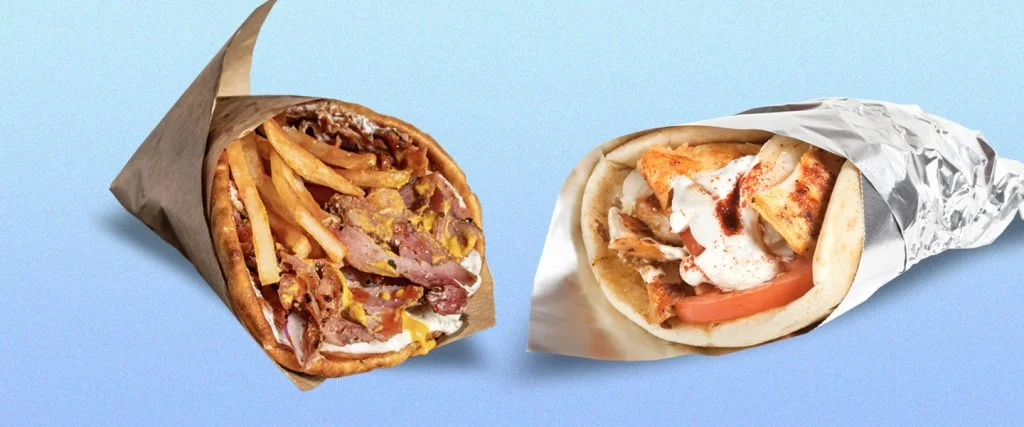
The Global Phenom of Vertical Roasting: Döner, Shawarma, and Gyros
Food has an extraordinary ability to travel across oceans, cross political borders, and weave itself into the daily fabric of completely different cultures. While many regional dishes remain trapped within their geographical origins, a singular cooking technique born in the heart of the Middle East managed to conquer the global culinary landscape. This technique is the vertical spit roast. By stacking layers of seasoned meat on a towering vertical skewer and slowly spinning it against a wall of intense heat, chefs unlocked a flawless equation of juicy interiors and crispy, deeply caramelized edges. Today, this masterclass in culinary physics lives on through three massive global variations: Turkish Döner Kebab, Middle Eastern Shawarma, and Greek Gyros.
The Turkish Pioneer: Döner Kebab
The historical lineage of the vertical spit begins in the mid-19th century in the Ottoman city of Bursa. A clever butcher named İskender Efendi noticed that traditional horizontal roasting caused the melting fat to drip into the hot coals, sparking smoke and drying out the meat. By rotating the spit vertically, he realized the fat would continually cascade down the sides of the meat stack, basting it naturally.
An authentic https://kebabvalls.com/ Turkish Döner is defined by its purity. It relies heavily on Yaprak (meaning “leaf”), which refers to pristine, paper-thin slices of lamb or beef stacked tightly with layers of tail fat. The marinade is minimalist yet potent, utilizing strained onion juice, plain yogurt, and cracked black pepper. When sliced with a razor-sharp, sword-like knife, it is traditionally served naked over buttery rice or stuffed into a crispy flatbread with nothing more than raw onions, tomatoes, and a dusting of sumac.
The Levantine Evolution: Shawarma
As the vertical roasting technique migrated south into the Levant—spanning modern-day Lebanon, Syria, Jordan, and Palestine—it evolved into Shawarma, a word derived from the Arabic pronunciation of the Turkish word for “turning” (çevirme). While it shares ancestral roots with the döner, shawarma carved out a wildly different flavor profile.
The secret to shawarma lies in its aggressive, aromatic marinade. The meat—which heavily features chicken thighs or a mix of beef and lamb—is bathed in a complex elixir of warm spices like cardamom, cinnamon, cloves, cumin, and turmeric, often brightened with orange juice or vinegar. Instead of the simple garnishes of Istanbul, a Lebanese shawarma wrap is a culinary theater of intense contrasts: chicken shawarma is rolled tightly in thin marquq bread with an aggressively pungent garlic paste (toum) and salty pickled turnips, while beef shawarma is drenched in a rich, nutty tahini sauce.
The Hellenic Adaptation: Gyros
When Greek immigrants from Asia Minor arrived in Athens and New York City in the early to mid-20th century, they brought the vertical spit with them, giving it the Greek name Gyros (literally meaning “turn”). To fit the local palate and dietary habits, the dish underwent a radical transformation, most notably through the introduction of pork as the primary meat option.
A traditional Greek gyros features stacked layers of pork neck or shoulder marinated in Mediterranean herbs like wild oregano, dried thyme, and garlic. However, when the dish exploded in the United States, it morphed into a unique ground beef and lamb composition processed into a smooth, uniform cone. Served inside a thick, fluffy, oiled pita bread, a classic gyros is characterized by its refreshing, cooling elements: a mountain of shredded lettuce, ripe tomatoes, and a generous dollop of cucumber-and-dill-infused tzatziki yogurt sauce, frequently accompanied by a handful of hot french fries stuffed directly inside the wrap.