
The Silent Sentinel: Infection Control and the Masked Nurse of the Mid-Century
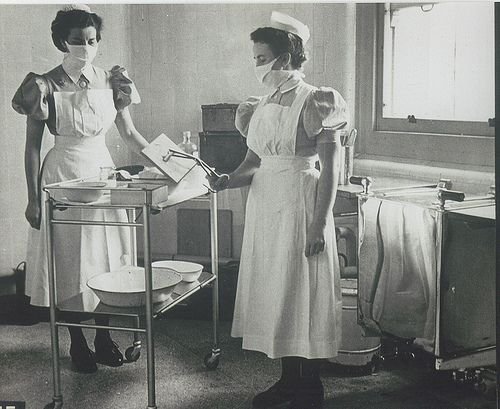
This fifth photograph introduces a critical and timely theme: Infection Control and Barrier Nursing. While the previous images focused on medication, bedside vigilance, and emergency response, this scene—likely from the 1940s or early 1950s—shows two nurses in a high-stakes environment where the invisible threat of contagion was the primary concern. They are seen wearing cloth masks and aprons, a visual representation of the pre-antibiotic and early-antibiotic era’s struggle against infectious diseases like tuberculosis, polio, or influenza.
The Evolution of the Surgical Mask
In this era, the “mask” was far from the disposable N95 or synthetic surgical masks we use today.
-
Laundered Gauze: Masks were typically made of several layers of fine-mesh cotton gauze. They were not discarded after a single use; instead, they were collected, laundered, heavily bleached, and sterilized for reuse.
-
The Fit and Function: Notice how high the masks sit on the nurses’ faces. These were designed to protect both the patient and the nurse, though their filtration efficacy was limited compared to modern standards. In the mid-20th century, masking was often reserved for specific “isolation wards” or surgical theaters, signaling that the patient being treated in this room was likely highly vulnerable or highly contagious.
The “Clean” vs. “Dirty” Workflow
The nurses are working around a metal rolling cart containing basins and what appear to be sterile dressings or linens. This reflects the rigid “Barrier Nursing” protocols of the time.
-
The Sterile Field: In an age before mass-produced plastic disposables, maintaining a “sterile field” was an arduous task. Every metal basin and glass jar had to be boiled or autoclaved.
-
The Hand-Wash Ritual: The basin on the lower shelf of the cart hints at the constant need for hand-scrubbing. Without the convenience of alcohol-based hand rubs, nurses of this era spent a significant portion of their shift at the sink, often using harsh carbolic soaps that took a heavy toll on their skin.
Comparison: Mid-Century Isolation vs. Modern PPE
| Feature | 1950s Isolation Nursing | Modern PPE Protocol |
| Mask Material | Multi-layer cotton gauze (Reusable). | Non-woven synthetic fibers (Disposable/N95). |
| Gowns/Aprons | Heavy starched cotton pinafores. | Fluid-resistant plastic or spun-bond gowns. |
| Sterilization | On-site boiling and autoclaving of tools. | Centralized sterilization and single-use kits. |
| Communication | Direct, face-to-face through cloth. | Enhanced by intercoms and clear-window masks. |
The Psychological Weight of the Mask
The use of masks in the mid-century hospital was a profound psychological barrier. For the patient, seeing a masked nurse often signaled the severity of their condition. It removed the “comforting smile” that was so central to the nursing identity of the time.
For the nurses, the mask was a constant reminder of the “silent sentinel” they had to become. They were the gatekeepers of the sterile environment. The focus in their eyes—visible above the white gauze—speaks to the intense discipline required to ensure that not a single movement or touch compromised the safety of the ward.
A Legacy of Protection
This photograph captures a moment in the long history of aseptic technique—a journey that signaturenurse began with Joseph Lister and Florence Nightingale and continues into our modern era of pandemic preparedness. These nurses were the front lines of defense against pathogens that, at the time, were often lethal.
Their reliance on cloth, glass, and metal—maintained through sheer labor and meticulous habit—laid the groundwork for the infection control departments that now exist in every modern hospital. The image stands as a tribute to the “cleanliness is next to godliness” era of nursing, where the starch in the apron and the bleach in the mask were the primary weapons against the spread of disease.